

monacobet.sk v roku 2026: recenzie od overených hráčov
monacobet.sk hodnotí dostupnosť informácií o kasíne a ich zrozumiteľnosť pre bežného hráča. Transparentné podmienky a jasné pravidlá sú základom dôvery. Každá recenzia by mala poukázať na prípadné skryté poplatky alebo nejasnosti. monacobet sk recenzia je v tejto súvislosti mimoriadne dôležitý.
fruit poker — tipy pre začiatočníkov | fruit poker
See also:
- Logo a vizuálny prehľad monacobet.sk
- Čo potrebujete vedieť o monacobet app v podpore
- Výbery, platobné metódy a bonusové podmienky monacobet.sk
- Ako monacobet.sk chráni hráčov pred závislosťou
- Kedy využiť monacobet registrácia?
- Samos vylúčenie a limity vkladov na monacobet.sk
Logo a vizuálny prehľad monacobet.sk
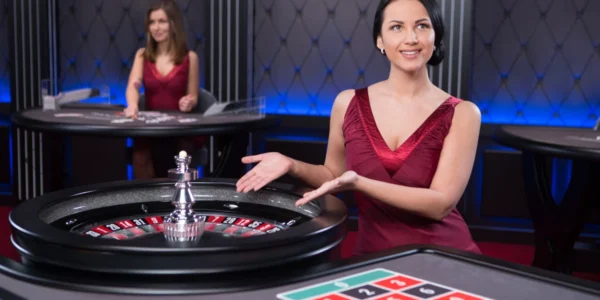
Čo potrebujete vedieť o monacobet app v podpore
The term ‘variants’ refers to distinct versions or forms of something that differ from one another while sharing a common origin or baseline. In the context of genetics, variants are alterations in the DNA sequence that can be as small as a single nucleotide change (single nucleotide polymorphism, or SNP) or as large as structural rearrangements involving thousands of bases. These genetic variants are the raw material for evolution, providing the diversity upon which natural selection acts. For instance, a variant in the gene coding for hemoglobin can lead to sickle cell anemia, a condition where red blood cells become rigid and sickle-shaped, causing pain and organ damage. However, not all variants are deleterious; some confer advantages, such as the variant that provides resistance to malaria in carriers of the sickle cell trait. In bioinformatics, variant calling is a critical step in analyzing next-generation sequencing data, where algorithms compare sequenced reads to a reference genome to identify differences. These variants can be classified as single nucleotide variants (SNVs), insertions and deletions (indels), copy number variations (CNVs), and larger structural variants (SVs). Each type has distinct implications for disease association and drug response. For example, in oncology, tumor sequencing often reveals somatic variants that drive cancer progression, guiding targeted therapies like tyrosine kinase inhibitors for EGFR-mutant lung cancers. Beyond genetics, the concept of variants extends to software development, where version control systems track different variants of code, allowing developers to manage branches and merges. In linguistics, variants of a language—such as dialects or sociolects—reflect regional or social differences in pronunciation, vocabulary, and grammar. The study of these variants, known as variationist sociolinguistics, examines how language changes over time and space, influenced by factors like migration and contact. In manufacturing, product variants are distinct models or configurations of a base product, engineered to meet diverse customer needs. For example, an automobile manufacturer might offer a sedan, a hatchback, and a coupe as variants of the same platform, each with unique body styles and features. In the realm of statistics, variants refer to different data points or observations within a dataset; understanding their distribution and variance is fundamental to inferential statistics. The term also appears in mathematics, particularly in algebra, where a variant might be a different expression or equation derived from a common one. In computer networking, protocol variants like TCP variants (e.g., Reno, Cubic, BBR) are designed to optimize congestion control under different network conditions. Each variant implements distinct algorithms for adjusting the sending rate based on packet loss and delay, impacting throughput and fairness. In the context of viruses, variants emerge through mutations that alter the virus’s properties, such as transmissibility, virulence, or antigenicity. The emergence of SARS-CoV-2 variants like Alpha, Beta, Gamma, Delta, and Omicron highlighted the importance of genomic surveillance to monitor changes that could affect vaccine efficacy. For instance, the Omicron variant harbored numerous mutations in the spike protein, leading to increased immune escape and reduced neutralization by antibodies from prior infection or vaccination. This prompted the development of updated boosters targeting the variant. In the pharmaceutical industry, drug variants are analogs or derivatives of a lead compound, synthesized to improve efficacy, reduce side effects, or overcome resistance. A classic example is the development of penicillin derivatives like amoxicillin and methicillin to broaden the spectrum and combat beta-lactamase-producing bacteria. In literature, textual variants are differences between manuscripts or editions of a work, which are crucial for textual criticism and establishing authoritative editions. For example, the various quarto and folio editions of Shakespeare’s plays contain numerous variants that scholars analyze to reconstruct the original text. In music, a variant is a version of a theme or melody that is altered through variation techniques, such as ornamentation, rhythmic changes, or harmonic shifts. Composers like Bach and Beethoven excelled in creating sets of variations, such as the Goldberg Variations and Diabelli Variations, which explore the thematic material in countless permutations. In sports, a variant might be a rule modification for a specific league or competition, like the three-point line in basketball or the designated hitter in baseball, which create different strategic dynamics. In culinary arts, variants of a dish are regional adaptations that use local ingredients or cooking methods, such as the many versions of paella across Spain or the diverse curry recipes in India. In product design, variants are often created to cater to different market segments, such as a smartphone available in multiple storage capacities, colors, and trim levels. These variants share a core design but differ in specific attributes, allowing consumers to choose based on price and preference. In the context of databases, variants might refer to different schemas or data models that represent the same information in alternative ways, each optimized for different query patterns or storage constraints.
volne tocenia dnes 2026 — výhody a nevýhody
Výbery, platobné metódy a bonusové podmienky monacobet.sk
- Mastercard
- Visa
- Skrill
- 50x obrat vkladu
- 40x podmienka stávkovania
- 100 vkladových free spinov
- 75% na vklad až €750
Ako monacobet.sk chráni hráčov pred závislosťou
(1) In the beginning was the Word, and the Word was with God, and the Word was God. (2) The same was in the beginning with God. (3) All things were made by him; and without him was not any thing made that was made. (4) In him was life; and the life was the light of men. (5) And the light shineth in darkness; and the darkness comprehended it not. (6) There was a man sent from God, whose name was John. (7) The same came for a witness, to bear witness of the Light, that all men through him might believe. (8) He was not that Light, but was sent to bear witness of that Light. (9) That was the true Light, which lighteth every man that cometh into the world. (10) He was in the world, and the world was made by him, and the world knew him not. (11) He came unto his own, and his own received him not. (12) But as many as received him, to them gave he power to become the sons of God, even to them that believe on his name: (13) Which were born, not of blood, nor of the will of the flesh, nor of the will of man, but of God. (14) And the Word was made flesh, and dwelt among us, (and we beheld his glory, the glory as of the only begotten of the Father,) full of grace and truth. (15) John bare witness of him, and cried, saying, This was he of whom I spake, He that cometh after me is preferred before me: for he was before me. (16) And of his fulness have all we received, and grace for grace. (17) For the law was given by Moses, but grace and truth came by Jesus Christ. (18) No man hath seen God at any time; the only begotten Son, which is in the bosom of the Father, he hath declared him. (19) And this is the record of John, when the Jews sent priests and Levites from Jerusalem to ask him, Who art thou? (20) And he confessed, and denied not; but confessed, I am not the Christ. (21) And they asked him, What then? Art thou Elias? And he saith, I am not. Art thou that prophet? And he answered, No. (22) Then said they unto him, Who art thou? that we may give an answer to them that sent us. What sayest thou of thyself? (23) He said, I am the voice of one crying in the wilderness, Make straight the way of the Lord, as said the prophet Esaias. (24) And they which were sent were of the Pharisees. (25) And they asked him, and said unto him, Why baptizest thou then, if thou be not that Christ, nor Elias, neither that prophet? (26) John answered them, saying, I baptize with water: but there standeth one among you, whom ye know not; (27) He it is, who coming after me is preferred before me, whose shoe’s latchet I am not worthy to unloose. (28) These things were done in Bethabara beyond Jordan, where John was baptizing. (29) The next day John seeth Jesus coming unto him, and saith, Behold the Lamb of God, which taketh away the sin of the world. (30) This is he of whom I said, After me cometh a man which is preferred before me: for he was before me. (31) And I knew him not: but that he should be made manifest to Israel, therefore am I come baptizing with water. (32) And John bare record, saying, I saw the Spirit descending from heaven like a dove, and it abode upon him. (33) And I knew him not: but he that sent me to baptize with water, the same said unto me, Upon whom thou shalt see the Spirit descending, and remaining on him, the same is he which baptizeth with the Holy Ghost. (34) And I saw, and bare record that this is the Son of God. (35) Again the next day after John stood, and two of his disciples; (36) And looking upon Jesus as he walked, he saith, Behold the Lamb of God! (37) And the two disciples heard him speak, and they followed Jesus. (38) Then Jesus turned, and saw them following, and saith unto them, What seek ye? They said unto him, Rabbi, (which is to say, being interpreted, Master,) where dwellest thou? (39) He saith unto them, Come and see. They came and saw where he dwelt, and abode with him that day: for it was about the tenth hour. (40) One of the two which heard John speak, and followed him, was Andrew, Simon Peter’s brother. (41) He first findeth his own brother Simon, and saith unto him, We have found the Messias, which is, being interpreted, the Christ.
Rady ohľadom monacobet.sk zahŕňajú aj overenie podpory zákazníkov.
tipos kasino — jednoduchý návod | tipos casino
Kedy využiť monacobet registrácia?
Je monacobet.sk legálna a bezpečná kasínová stránka?
monacobet.sk je licencovaná a regulovaná príslušným orgánom (Úrad pre reguláciu hazardných hier), čo zaručuje bezpečné a férové prostredie pre hráčov. Stránka používa šifrovanie a zodpovedné herné praktiky.
Ako môžem overiť dôveryhodnosť a recenzie na monacobet.sk?
Odporúčame prečítať si nezávislé recenzie na renomovaných portáloch a skontrolovať hodnotenia hráčov. Takisto si overte licenciu a históriu prevádzkovateľa.
Čo mám robiť, ak mám problém s výberom peňazí alebo inou sťažnosťou voči monacobet.sk?
V prípade akýchkoľvek problémov kontaktujte zákaznícku podporu kasína cez live chat, e-mail alebo telefón. Ak sa problém nevyrieši, môžete sa obrátiť na licenčný úrad alebo nezávislý orgán pre riešenie sporov.
Aké sú možnosti kontaktovania zákazníckej podpory monacobet.sk?
Podpora je dostupná 24/7 prostredníctvom live chatu, e-mailu a telefónu. V sekcii Kontakt nájdete všetky potrebné údaje vrátane adresy prevádzkovateľa.
Je monacobet.sk dôveryhodná z hľadiska výplat a výherných podmienok?
Kasíno spĺňa licenčné požiadavky na férové hry a rýchle výplaty. Pred hrou si vždy prečítajte obchodné podmienky, vrátane 40x obrat vkladu a €5, aby ste predišli nedorozumeniam.
Samos vylúčenie a limity vkladov na monacobet.sk
Hazard je určený výlučne osobám starším ako 18 rokov a hráči by mali vždy pristupovať k hre ako k forme zábavy, nie ako k spôsobu, ako získať peniaze alebo dohnať predchádzajúce straty. monacobet.sk pôsobí na slovenskom trhu v súlade s právnymi predpismi, pričom dohľad nad legálnym hazardom vykonáva Ministerstvo financií Slovenskej republiky ako príslušný štátny orgán. Ak máte pocit, že hra prestáva byť zábavou a začína mať negatívny vplyv na váš život, mali by ste zvážiť využitie nástrojov na sebavylúčenie, ktoré prevádzkovatelia na Slovensku ponúkajú, a obrátiť sa na odbornú pomoc. V prípade potreby vyhľadajte miestnu poradenskú službu alebo linku dôvery, ktorá sa špecializuje na problematiku hazardného hráčstva, a nezostávajte s tým sami. Zároveň odporúčame nastaviť si limity na vklady, limity na čas strávený hrou a pravidelne si kontrolovať, či vaše hranie zostáva v medziach, ktoré ste si sami určili. Hra by mala byť predovšetkým zábavou a nikdy by nemala slúžiť na riešenie finančných problémov či na naháňanie strát.
